I get this question fairly often, usually in a timid, apologetic voice, as if it must surely be obvious to everyone else on the planet. Not really.
Here are a few quick answers.
First, according to a survey of Web 2.0 use sponsored by the MacArthur Foundation, CoSN, ASCD, and the Metiri Group:
Definition of Web 2.0
For the purposes of this survey, Web 2.0 applications use the World Wide Web (WWW) as a platform and allow for participatory involvement, collaboration, and interactions among users. Web 2.0 is also characterized by the creation and sharing of intellectual and social resources by end users. Examples of Web 2.0 applications are web logs or “blogs”; online diaries that allow the owner to state ideas and opinions and readers to react; WIKIS, collections of information on topics that can be edited by a group such as Wikipedia; and social networking sites (e.g., Facebook) where users can create personalized pages of information and interact with others.
Second, a video by Michael Wesch demonstrates the evolution of the Web into the participatory media that is described above.
Third, the Wikipedia entry, which has a decidedly business-oriented and chronological point of view:
The term "Web 2.0" describes the changing trends in the use of World Wide Web technology and web design that aim to enhance creativity, communications, secure information sharing, collaboration and functionality of the web. Web 2.0 concepts have led to the development and evolution of web-culture communities and hosted services, such as social-networking sites, video sharing sites, wikis, blogs, and folksonomies. The term first became notable after the O'Reilly Media Web 2.0 conference in 2004.[1][2] Although the term suggests a new version of the World Wide Web, it does not refer to an update to any technical specifications, but rather to changes in the ways software developers and end-users utilize the Web. According to Tim O'Reilly:
Web 2.0 is the business revolution in the computer industry caused by the move to the Internet as a platform, and an attempt to understand the rules for success on that new platform.[3]
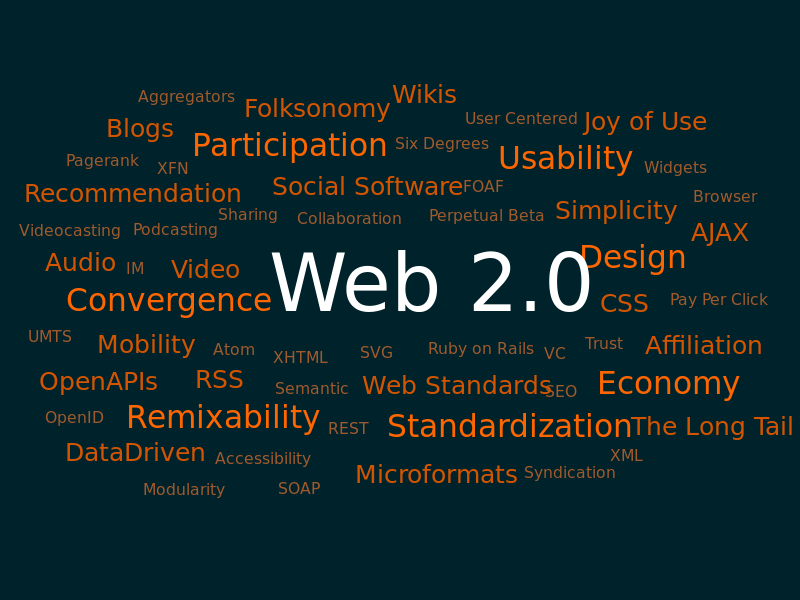
Finally, a word cloud illustration that accompanies the Wikipedia article.
Some people have already started talking about "Web 3.0," but I think that's really overshooting the hype tolerance of most people. Let's just work on getting everybody using Web 2.0 first, shall we?
